
VA490 Graduation Project

VA490 Graduation Project
Syllabus | International University of Sarajevo - Last Update on Mar 03, 2026

Syllabus Quick Jump
Search and navigate to any syllabus instantly
Visual Arts and Visual Communications Design
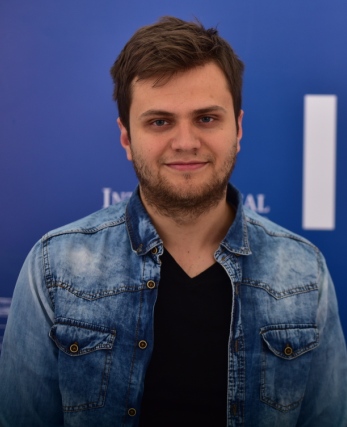
Emir Hambo
Course Lecturer
Course Objectives
The aims of this course are to: • Demonstrate a familiarity with knowledge and information associated with a chosen topic in visual arts • Identify and communicate the main problem/question of a chosen topic, along with several subsidiary aspects of the problem • Demonstrate evidence of practice with materials, tools, and software • Acquire knowledge and skills in Art and Design in response to market needs
Learning Outcomes
After successful completion of the course, the student will be able to:
Course Materials
Required Textbook
1. Literature selection is based on the Individual student topic 2. VACD Graduation Project Theory Part template and manual
Additional Literature
To be determined accordingly in agreement with the Candidate.Teaching Methods
Consultations
Presentations
Research
Midterm
Final exam
Self-evaluation.
Weekly Topics
| Week | Topic | Readings / References |
|---|---|---|
| 1 | Individual selfdriven work under the guidance of mentor | consultations |
| 2 | Individual selfdriven work under the guidance of mentor | consultations |
| 3 | Individual selfdriven work under the guidance of mentor | consultations |
| 4 | Individual selfdriven work under the guidance of mentor | consultations |
| 5 | Individual selfdriven work under the guidance of mentor | consultations |
| 6 | Individual selfdriven work under the guidance of mentor | consultations |
| 7 | Individual selfdriven work under the guidance of mentor | consultations |
| 8 | MIDTERM | presentation / discussion |
| 9 | Individual selfdriven work under the guidance of mentor | consultations |
| 10 | Individual selfdriven work under the guidance of mentor | consultations |
| 11 | Individual selfdriven work under the guidance of mentor | consultations |
| 12 | Individual selfdriven work under the guidance of mentor | consultations |
| 13 | Individual selfdriven work under the guidance of mentor | consultations |
| 14 | Individual selfdriven work under the guidance of mentor | consultations |
| 15 | FINAL EXAM / FINAL ASSIGNMENT | presentation / discussion |
Course Schedule (All Sections)
Office Hours & Room
| Day | Time | Office | Notes |
|---|---|---|---|
| Tuesday | 15:00 - 17:00 | B F2.25 | |
| Wednesday | 10:00 - 12:00 | B F2.25 | |
| Thursday | 10:00 - 12:00 | B F2.25 | |
| Friday | 09:00 - 17:00 | B F2.25 | Research |
Assessment Methods and Criteria
Assessment Components
Final Exam / Final Assignment
AI: Not AllowedAlignment with Learning Outcomes : 1 2 3 4
Disemination of topic (mentor)
AI: Not AllowedAlignment with Learning Outcomes : 1 4 5
Midterm Dissemination and Review
AI: Not AllowedAlignment with Learning Outcomes : 2 3 4 5
Attendance and engagement
AI: Not AllowedAlignment with Learning Outcomes : 3 4 5
Research and theoretical part
AI: Not AllowedAlignment with Learning Outcomes : 1 2 3 4
IUS Grading System
| Grading Scale | IUS Grading System | IUS Coeff. | Letter (B&H) | Numerical (B&H) |
|---|---|---|---|---|
| 0 - 44 | F | 0 | F | 5 |
| 45 - 54 | E | 1 | ||
| 55 - 64 | C | 2 | E | 6 |
| 65 - 69 | C+ | 2.3 | D | 7 |
| 70 -74 | B- | 2.7 | ||
| 75 - 79 | B | 3 | C | 8 |
| 80 - 84 | B+ | 3.3 | ||
| 85 - 94 | A- | 3.7 | B | 9 |
| 95 - 100 | A | 4 | A | 10 |
Late Work Policy
Information about late submission policies will be shared during class and posted in this section. Please check back for official guidelines.
ECTS Credit Calculation
📚 Student Workload
This 6 ECTS credit course corresponds to 150 hours of total student workload, distributed as follows:
Research and theoretical part
45 hours ⏳ (15 week × 3 h)
Disemination of topic (mentor)
30 hours ⏳ (15 week × 2 h)
Attendance and engagement
30 hours ⏳ (15 week × 2 h)
Midterm Dissemination and Review
21 hours ⏳ (7 week × 3 h)
Final Exam / Final Assignment
24 hours ⏳ (8 week × 3 h)
150 Total Workload Hours
6 ECTS Credits
Course Policies
Academic Integrity
All work submitted must be your own. Plagiarism, cheating, or any form of academic dishonesty will result in disciplinary action according to university policies. When in doubt about citation practices, consult the instructor.
Attendance Policy
Students are expected to adhere to the attendance requirements as outlined in the International University of Sarajevo Study Rules and Regulations. Excessive absences, whether excused or unexcused, may impact academic performance and eligibility for assessment. Mandatory sessions (e.g., labs, workshops) require attendance unless formally exempted. For detailed policies on absences, documentation, and penalties, please refer to the official university regulations.
Technology & AI Policy
Laptops/tablets may be used for note-taking only during lectures. Phones should be silenced and put away during all class sessions. Audio/video recording requires prior permission from the instructor.
Artificial Intelligence (AI) Usage: The use of AI tools (e.g., ChatGPT, Copilot, Gemini) varies by assessment component. Please refer to the AI usage indicator next to each assessment item in the Assessment Methods and Criteria section above. Submitting AI-generated content as your own work, where AI is not explicitly allowed, constitutes an academic integrity violation.
Communication Policy
All course-related communication should occur through official university channels (institutional email or SIS). Emails should include [VA490] in the subject line.
Academic Quality Assurance Policy
Course Academic Quality Assurance is achieved through Semester Student Survey. At the end of each academic year, the institution of higher education is obliged to evaluate work of the academic staff, or the success of realization of the curricula.
Learning Tips
Be prepared to contribute thoughtfully during class discussions, labs, or collaborative work. Active participation deepens understanding and encourages critical thinking.
Complete assigned readings or prep materials before class. Take notes, highlight key ideas, and jot down questions. Aim to grasp core concepts and their applications—not just facts.
Use course frameworks or methodologies to analyze problems, case studies, or projects. Begin early to allow time for reflection and refinement. Seek feedback to improve your work.
Don’t hesitate to reach out when something is unclear. Use office hours, discussion boards, or peer networks to clarify concepts and stay on track.
Syllabus Last Updated on Mar 03, 2026 | International University of Sarajevo
Print Syllabus
Referencing Curricula Print this page
| Course Code | Course Title | Weekly Hours* | ECTS | Weekly Class Schedule | ||||||
| T | P | |||||||||
| VA490 | Graduation Project | 0 | 3 | 6 | Monday, 16:00 - 18:50 | |||||
| Prerequisite | VA408 | It is a prerequisite to | - | |||||||
| Lecturer | Emir Hambo | Office Hours / Room / Phone | Tuesday: 15:00-17:00 Wednesday: 10:00-12:00 Thursday: 10:00-12:00 Friday: 9:00-17:00 Research |
|||||||
| ehambo@ius.edu.ba | ||||||||||
| Assistant | Assistant E-mail | |||||||||
| Course Objectives | The aims of this course are to: • Demonstrate a familiarity with knowledge and information associated with a chosen topic in visual arts • Identify and communicate the main problem/question of a chosen topic, along with several subsidiary aspects of the problem • Demonstrate evidence of practice with materials, tools, and software • Acquire knowledge and skills in Art and Design in response to market needs |
|||||||||
| Textbook | 1. Literature selection is based on the Individual student topic 2. VACD Graduation Project Theory Part template and manual | |||||||||
| Additional Literature |
|
|||||||||
| Learning Outcomes | After successful completion of the course, the student will be able to: | |||||||||
|
||||||||||
| Teaching Methods | Consultations, presentations, research, midterm, final exam, self-evaluation. | |||||||||
| Teaching Method Delivery | Hybrid / blended | Teaching Method Delivery Notes | ||||||||
| WEEK | TOPIC | REFERENCE | ||||||||
| Week 1 | Individual selfdriven work under the guidance of mentor | consultations | ||||||||
| Week 2 | Individual selfdriven work under the guidance of mentor | consultations | ||||||||
| Week 3 | Individual selfdriven work under the guidance of mentor | consultations | ||||||||
| Week 4 | Individual selfdriven work under the guidance of mentor | consultations | ||||||||
| Week 5 | Individual selfdriven work under the guidance of mentor | consultations | ||||||||
| Week 6 | Individual selfdriven work under the guidance of mentor | consultations | ||||||||
| Week 7 | Individual selfdriven work under the guidance of mentor | consultations | ||||||||
| Week 8 | MIDTERM | presentation / discussion | ||||||||
| Week 9 | Individual selfdriven work under the guidance of mentor | consultations | ||||||||
| Week 10 | Individual selfdriven work under the guidance of mentor | consultations | ||||||||
| Week 11 | Individual selfdriven work under the guidance of mentor | consultations | ||||||||
| Week 12 | Individual selfdriven work under the guidance of mentor | consultations | ||||||||
| Week 13 | Individual selfdriven work under the guidance of mentor | consultations | ||||||||
| Week 14 | Individual selfdriven work under the guidance of mentor | consultations | ||||||||
| Week 15 | FINAL EXAM / FINAL ASSIGNMENT | presentation / discussion | ||||||||
| Assessment Methods and Criteria | Evaluation Tool | Quantity | Weight | Alignment with LOs | AI Usage |
| Final Exam / Final Assignment | 1 | 40 | 1,2,3,4 | Not Allowed | |
| Semester Evaluation Components | |||||
| Disemination of topic (mentor) | 1 | 10 | 1,4,5 | Not Allowed | |
| Midterm Dissemination and Review | 1 | 30 | 2,3,4,5 | Not Allowed | |
| Attendance and engagement | 1 | 10 | 3,4,5 | Not Allowed | |
| Research and theoretical part | 1 | 10 | 1,2,3,4 | Not Allowed | |
| *** ECTS Credit Calculation *** | |||||
| Activity | Hours | Weeks | Student Workload Hours | Activity | Hours | Weeks | Student Workload Hours | |||
| Research and theoretical part | 3 | 15 | 45 | Disemination of topic (mentor) | 2 | 15 | 30 | |||
| Attendance and engagement | 2 | 15 | 30 | Midterm Dissemination and Review | 3 | 7 | 21 | |||
| Final Exam / Final Assignment | 3 | 8 | 24 | |||||||
| Total Workload Hours = | 150 | |||||||||
| *T= Teaching, P= Practice | ECTS Credit = | 6 | ||||||||
| Course Academic Quality Assurance: Semester Student Survey | Last Update Date: 27/03/2026 | |||||||||