 ARCH307 Sustainable Design
Syllabus | International University of Sarajevo - Last Update on Feb 02, 2026

Syllabus Quick Jump
Search and navigate to any syllabus instantly
Architecture
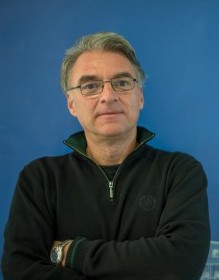
Adi Ćorović
Course Lecturer
Course Objectives
This course will critically examine concepts, theories and practices of sustainable design across multiple scales. "Low tech" and "High tech" strategies will be examined, and exellence in architectural design will be explored through a critical analysis of case studies that employed "state of the art" technologies. The goal is to understand how passive and active sustainable design strategies have not only been integrated into the design process but also drive the architectural and urban form.
Learning Outcomes
After successful completion of the course, the student will be able to:
Course Materials
Required Textbook
16 Jong-Jin Kim. Sustainable Architecture Module: Introduction to Sustainable Design. Michigan, 1998.; 14 Daniel E. Williams. Sustainable Design Ecology, Architecture and Planning. John Wiley & Sons, Inc., US, Canada 2007.; 2 Richard Hyde. Bioclimatic Housing Innovative Design for Warm Climates. US, Canada, 2008.; 12 Charles J. Kibert. Sustainable Construction. John Wiley & Sons., 2013.; 7 Michael Bauer, Peter Mösle and Michael Schwarz. Green Building – Guidebook for Sustainable Architecture, 2009.; 13 David Bergman. Sustainable design. NY, 2021.; 5 Thomas Schröpfer - Dense + Green, Birkhäuser, 2016; 11 Sustainability, Energy and Architecture Case Studies in Realizing Green Buildings, Ali Sayigh, Elsevier, 2014
Additional Literature
Sustainable building design book, The 2005 World Sustainable Building Conference in Tokyo, Student Session 23-29 September 2005, Tokyo, Japan; J. Spacey. Sust. Light techniqures; Rob McLeod. Kym Mead. Mark Standen. Designer’s guide. A guide for the design team and local authorities. - Passivhaus Primer – Designer’s guide, BRE edition; Dr. Luke Whale. Thermal bridging guide. Zero Carbon Hub; T Schröpfer - Dense + Green 2016, Basel, Edition of Andreas Müller; A Common Definition for Zero Energy Buildings. Prepared for the U.S. Department of Energy by The National Institute of Building Sciences. September 2015; Simon Joss. Eco cities. Modus magazine, University of Glasgow, 06.11, 31 July 2015; Shanti Pless, Paul Torcellini. Net-Zero Energy Buildings: A classification System Based on Renewable Energy Supply options. National Renewable Energy Laboratory, Technical report NREL/TP-550-44586, June 2010; 2 Richard Hyde. Bioclimatic Housing Innovative Design for Warm Climates. US, Canada, 2008.; Dr. Luke Whale, C4Ci Consultants. Thermal bridging guide. Zero Carbon Hub, bre; Rob McLeod, Kym Mead, Mark Standen. Bre. Passivhaus primer: Designer’s guide. A guide for the design team. and local authorities. www.passivhaus.org.uk; 10+ Sustainable Lighting Techniques – Simplicable - John Spacey concept – tecnologist – Singapore. (Investment banking experience – product development, but also strategy planing and program management; Morrison Hershfield Ltd. Team. “Building EnvelopeThermal Bridging Guide VERSION1.620 1.6 2021” - Toronto, 2021Teaching Methods
1
Class lectures (instructor's presentations) 2
Student researchs of sustainable design topics and/or case studies 3
Team based sustainable design project
Weekly Topics
| Week | Topic | Readings / References |
|---|---|---|
| 1 | Introduction of the course. Presentation of project program | Instructor Presentation |
| 2 📍 | NON WORKING DAY. Approaches to Sustainable Design Practice, Sustainable passive approach house, Group selection of the locations and buildings | J-Jin Kim, 1998., Williams 2007. |
| 3 | Strategies and Principles for Sustainable Design Practice: Low energy Techiques, Average yearly temperatures data for Analysis; Calculation of Thermal Transmittance (U value), Presentation of the location | R. Hyde 2008; CJ Kibert 2013.mith, Chapter 11; 127-137 |
| 4 | Renewable Technologies, Analysis (1st part); | M. Bauer, 2009. |
| 5 | Sustainable lighting, Analysis (2nd part) Determination of the approximative n. of inhabitants or consumers and average annual energy/el. consumption per capita in kWh per year; Annual Sunshine Hours | J. Spacey. Sust. Light techniqures |
| 6 | Wind & Rain Harvesting, Presentations of responses and related Case studies, calculation of the Site energy production and relation with the Total energy / electricity consumption on your site | D. Bergman. Sustainable design |
| 7 | Passive Technologies for Sustainability Design Practice, Response progress and related Case studies, Preparation for the Mid-term exam | D. Bergman. Sustainable design |
| 8 | Mid-term exam 25% | |
| 9 | Active Technologies for Sustainability Design Practice, Midterm analysis, Def. Project proposal, Site solution | D. Bergman. Sustainable design |
| 10 | Dense and Green technologies, Site, Groundfloor, Underground (s) | T Schröpfer - Dense + Green 38-47 |
| 11 | Building envelopes, Floors and Roof | M. Bauer, 2009., 74-91 |
| 12 | Traditional architecture and adaptive response to climate, 2 sections | A. Sayigh, 2014., 396 |
| 13 | Materials in Sustainable design, 2 elevations, initial 3D solution | M. Bauer, 2009., 92-99 |
| 14 | Eco-Cities and Zero Energy Development, Additional 2 elevations, 3D development | Smith, Chapter 19; 235-244 |
| 15 | Final project group presentation 40%, RIBA sustainable studies | RIBA video mat. related to sustainability |
Course Schedule (All Sections)
| Section | Type | Day 1 | Venue 1 | Day 2 | Venue 2 |
|---|---|---|---|---|---|
| ARCH307.1 | Course | Monday 15:00 - 16:50 | A F3.7 - Small Architecture Studio & A F3.8 - Big Architecture Studio | - | - |
Office Hours & Room
| Day | Time | Office | Notes |
|---|---|---|---|
| Monday | 10:00 - 14:00 | A F3.18 | ARCH302, ARCH405, ARCH401 |
Assessment Methods and Criteria
Assessment Components
Final Exam
AI: Not AllowedAlignment with Learning Outcomes : 1
Mid-term Exam
AI: Consult InstructorAlignment with Learning Outcomes : 1 2 3
Final project
AI: Consult InstructorAlignment with Learning Outcomes : 2 4 5
Activity
AI: Not AllowedAlignment with Learning Outcomes : 1 2 3 4 5
IUS Grading System
| Grading Scale | IUS Grading System | IUS Coeff. | Letter (B&H) | Numerical (B&H) |
|---|---|---|---|---|
| 0 - 44 | F | 0 | F | 5 |
| 45 - 54 | E | 1 | ||
| 55 - 64 | C | 2 | E | 6 |
| 65 - 69 | C+ | 2.3 | D | 7 |
| 70 -74 | B- | 2.7 | ||
| 75 - 79 | B | 3 | C | 8 |
| 80 - 84 | B+ | 3.3 | ||
| 85 - 94 | A- | 3.7 | B | 9 |
| 95 - 100 | A | 4 | A | 10 |
Late Work Policy
Information about late submission policies will be shared during class and posted in this section. Please check back for official guidelines.
ECTS Credit Calculation
📚 Student Workload
This 4 ECTS credit course corresponds to 100 hours of total student workload, distributed as follows:
Lecture Hours
14 hours ⏳ (14 week × 1 h)
Final project
28 hours ⏳ (14 week × 2 h)
Mid-term Exam Prep
15 hours ⏳ (5 week × 3 h)
Final Exam Prep
10 hours ⏳ (5 week × 2 h)
Home Study
33 hours ⏳ (11 week × 3 h)
100 Total Workload Hours
4 ECTS Credits
Course Policies
Academic Integrity
All work submitted must be your own. Plagiarism, cheating, or any form of academic dishonesty will result in disciplinary action according to university policies. When in doubt about citation practices, consult the instructor.
Attendance Policy
Students are expected to adhere to the attendance requirements as outlined in the International University of Sarajevo Study Rules and Regulations. Excessive absences, whether excused or unexcused, may impact academic performance and eligibility for assessment. Mandatory sessions (e.g., labs, workshops) require attendance unless formally exempted. For detailed policies on absences, documentation, and penalties, please refer to the official university regulations.
Technology & AI Policy
Laptops/tablets may be used for note-taking only during lectures. Phones should be silenced and put away during all class sessions. Audio/video recording requires prior permission from the instructor.
Artificial Intelligence (AI) Usage: The use of AI tools (e.g., ChatGPT, Copilot, Gemini) varies by assessment component. Please refer to the AI usage indicator next to each assessment item in the Assessment Methods and Criteria section above. Submitting AI-generated content as your own work, where AI is not explicitly allowed, constitutes an academic integrity violation.
Communication Policy
All course-related communication should occur through official university channels (institutional email or SIS). Emails should include [ARCH307] in the subject line.
Academic Quality Assurance Policy
Course Academic Quality Assurance is achieved through Semester Student Survey. At the end of each academic year, the institution of higher education is obliged to evaluate work of the academic staff, or the success of realization of the curricula.
Learning Tips
Be prepared to contribute thoughtfully during class discussions, labs, or collaborative work. Active participation deepens understanding and encourages critical thinking.
Complete assigned readings or prep materials before class. Take notes, highlight key ideas, and jot down questions. Aim to grasp core concepts and their applications—not just facts.
Use course frameworks or methodologies to analyze problems, case studies, or projects. Begin early to allow time for reflection and refinement. Seek feedback to improve your work.
Don’t hesitate to reach out when something is unclear. Use office hours, discussion boards, or peer networks to clarify concepts and stay on track.
Syllabus Last Updated on Feb 02, 2026 | International University of Sarajevo
Print Syllabus
Referencing Curricula Print this page
| Course Code | Course Title | Weekly Hours* | ECTS | Weekly Class Schedule | ||||||
| T | P | |||||||||
| ARCH307 | Sustainable Design | 1 | 1 | 4 | Mon. 15:00-16:50 | |||||
| Prerequisite | ARCH202 | It is a prerequisite to | - | |||||||
| Lecturer | Adi Ćorović | Office Hours / Room / Phone | Monday: 10:00-14:00 ARCH302, ARCH405, ARCH401 |
|||||||
| acorovic@ius.edu.ba | ||||||||||
| Assistant | Scholarship assistant Dženana Šenderović | Assistant E-mail | ||||||||
| Course Objectives | This course will critically examine concepts, theories and practices of sustainable design across multiple scales. "Low tech" and "High tech" strategies will be examined, and exellence in architectural design will be explored through a critical analysis of case studies that employed "state of the art" technologies. The goal is to understand how passive and active sustainable design strategies have not only been integrated into the design process but also drive the architectural and urban form. | |||||||||
| Textbook | 16 Jong-Jin Kim. Sustainable Architecture Module: Introduction to Sustainable Design. Michigan, 1998.; 14 Daniel E. Williams. Sustainable Design Ecology, Architecture and Planning. John Wiley & Sons, Inc., US, Canada 2007.; 2 Richard Hyde. Bioclimatic Housing Innovative Design for Warm Climates. US, Canada, 2008.; 12 Charles J. Kibert. Sustainable Construction. John Wiley & Sons., 2013.; 7 Michael Bauer, Peter Mösle and Michael Schwarz. Green Building – Guidebook for Sustainable Architecture, 2009.; 13 David Bergman. Sustainable design. NY, 2021.; 5 Thomas Schröpfer - Dense + Green, Birkhäuser, 2016; 11 Sustainability, Energy and Architecture Case Studies in Realizing Green Buildings, Ali Sayigh, Elsevier, 2014 | |||||||||
| Additional Literature |
|
|||||||||
| Learning Outcomes | After successful completion of the course, the student will be able to: | |||||||||
|
||||||||||
| Teaching Methods | 1. Class lectures (instructor's presentations) 2. Student researchs of sustainable design topics and/or case studies 3. Team based sustainable design project | |||||||||
| Teaching Method Delivery | Face-to-face | Teaching Method Delivery Notes | ||||||||
| WEEK | TOPIC | REFERENCE | ||||||||
| Week 1 | Introduction of the course. Presentation of project program | Instructor Presentation | ||||||||
| Week 2 | NON WORKING DAY. Approaches to Sustainable Design Practice, Sustainable passive approach house, Group selection of the locations and buildings | J-Jin Kim, 1998., Williams 2007. | ||||||||
| Week 3 | Strategies and Principles for Sustainable Design Practice: Low energy Techiques, Average yearly temperatures data for Analysis; Calculation of Thermal Transmittance (U value), Presentation of the location | R. Hyde 2008; CJ Kibert 2013.mith, Chapter 11; 127-137 | ||||||||
| Week 4 | Renewable Technologies, Analysis (1st part); | M. Bauer, 2009. | ||||||||
| Week 5 | Sustainable lighting, Analysis (2nd part) Determination of the approximative n. of inhabitants or consumers and average annual energy/el. consumption per capita in kWh per year; Annual Sunshine Hours | J. Spacey. Sust. Light techniqures | ||||||||
| Week 6 | Wind & Rain Harvesting, Presentations of responses and related Case studies, calculation of the Site energy production and relation with the Total energy / electricity consumption on your site | D. Bergman. Sustainable design | ||||||||
| Week 7 | Passive Technologies for Sustainability Design Practice, Response progress and related Case studies, Preparation for the Mid-term exam | D. Bergman. Sustainable design | ||||||||
| Week 8 | Mid-term exam 25% | |||||||||
| Week 9 | Active Technologies for Sustainability Design Practice, Midterm analysis, Def. Project proposal, Site solution | D. Bergman. Sustainable design | ||||||||
| Week 10 | Dense and Green technologies, Site, Groundfloor, Underground (s) | T Schröpfer - Dense + Green 38-47 | ||||||||
| Week 11 | Building envelopes, Floors and Roof | M. Bauer, 2009., 74-91 | ||||||||
| Week 12 | Traditional architecture and adaptive response to climate, 2 sections | A. Sayigh, 2014., 396 | ||||||||
| Week 13 | Materials in Sustainable design, 2 elevations, initial 3D solution | M. Bauer, 2009., 92-99 | ||||||||
| Week 14 | Eco-Cities and Zero Energy Development, Additional 2 elevations, 3D development | Smith, Chapter 19; 235-244 | ||||||||
| Week 15 | Final project group presentation 40%, RIBA sustainable studies | RIBA video mat. related to sustainability | ||||||||
| Assessment Methods and Criteria | Evaluation Tool | Quantity | Weight | Alignment with LOs | AI Usage |
| Final Exam | 1 | 25 | 1 | Not Allowed | |
| Semester Evaluation Components | |||||
| Mid-term Exam | 1 | 25 | 1,2,3 | Consult Instructor | |
| Final project | 1 | 40 | 2,4,5 | Consult Instructor | |
| Activity | 1 | 10 | 1,2,3,4,5 | Not Allowed | |
| *** ECTS Credit Calculation *** | |||||
| Activity | Hours | Weeks | Student Workload Hours | Activity | Hours | Weeks | Student Workload Hours | |||
| Lecture Hours | 1 | 14 | 14 | Final project | 2 | 14 | 28 | |||
| Mid-term Exam Prep | 3 | 5 | 15 | Final Exam Prep | 2 | 5 | 10 | |||
| Home Study | 3 | 11 | 33 | 0 | ||||||
| Total Workload Hours = | 100 | |||||||||
| *T= Teaching, P= Practice | ECTS Credit = | 4 | ||||||||
| Course Academic Quality Assurance: Semester Student Survey | Last Update Date: 20/02/2026 | |||||||||